Saturday, December 27, 2014

Should Teens Get Laser Hair Removal?

By


When I announced my fifth-grade desire to start shaving my legs, my mother’s protective wisdom was that I put it off as long as possible. Once you start, she explained, you can never stop. Stubble — which is more unpleasant than blonde tween fur — will come and keep coming until you die. I stole my dad’s Bic and jumped on the hamster wheel.

But the advent of laser hair removal has inverted the teen hair-removal equation. The sooner have your follicles obliterated by a beam of concentrated light, the more hours of your life you might reclaim for pursuits more stimulating than shaving and waxing. And as laser hair removal gets cheaper and more convenient (especially in New York, where you don’t need to be a doctor to do it), the rites and humiliation of puberty remain pretty much the same. Once a pricy last resort for teen girls bullied for their mustaches, laser hair removal is now a plausible first choice for young women finding hair in new places. But is it actually a good idea?

Children’s fashion designer Bonnie Young suspects that some of her tween models have already been lasered and for that, she’s grateful. “Nobody wants to see a photograph with hair all over their legs,” she told the Cut. But when her own 13-year-old daughter came home recently asking for laser hair removal for herself — and reporting (as 13-year-olds do) that everyone at her downtown Manhattan school is getting it — Young had mixed feelings, specifically about the safety.

Used improperly, the lasers can cause disfiguring burns. But in the hands of a physician (for whom, alas, there is no Lifebooker deal), it’s safe at all ages. Dermatologist and clinical researcher Dr. Macrene Alexiades-Armenakas told the Cut that her own 15-year-old daughter hasn’t shown any interest, but “the moment she says the word, she can be zapped!” In Dr. Alexiades-Armenakas’s experience, laser hair removal is well-tolerated in older teenagers; in other words, they won’t back out once the — admittedly uncomfortable — procedure has begun. Treating someone in the 12, 13, 14 age range requires making sure the child isn’t being coerced by her parents and is “mature enough to understand that this is a means to an end.” But Dr. Alexiades-Armenakas says that when parents bring in children as young as 10 or 11, she advises them to wait.

My friend, whom I’ll call Sally, was that child. When she was 11, her mother took her to get her eyebrows lasered — it was one of the many beauty treatments she purchased for herself in bulk and shared with Sally and her little sister. It didn’t make her any more or less self-conscious, Sally told me, to learn at such a young age that her eyebrows were “wrong” and correct them with laser hair removal. It did, however, bore her. “I was like, 'Why do I have to go sit in that chair after school?' But it wasn’t traumatizing.” (What was traumatizing, she said, was the chemical peel that turned her face purple: “It was right before this important, for me, Jewish youth retreat where this guy was going to be that I was flirting with.”) Of course, Sally got lucky in that her mom preferred then-unfashionable Brooke Shields–brows to the thin arches of the '00s, and so Sally held onto her thick eyebrows through their fashion renaissance.

This is the true risk of laser hair removal: It’s permanent. Our feelings about body hair, less so. In fact, a woman’s beauty regimen is rarely more masochistic than immediately post-puberty. No one would allow a teen to make her raccoon eyeliner and flat-ironed hair permanent. Is body hair so different? Second only to passé brows, in terms of regret risk, is a passé bush.

Because laser hair removal works best where the hair is darkest and the skin is lightest, Dr. Alexiades-Armenakas said, pubic-hair removal is very permanent. She’s had to talk women out of the landing strips. Cameron Diaz, of all people, is on a similar mission. She advised women against lasering their pubes in The Body Book. “The idea that vaginas are preferable in a hairless state is a pretty recent phenomenon,” she wrote, “and all fads change, people.” And by some measures, hairless vaginas are already on the way out.

I too have dialed back grooming from the extreme waxes I got in high school, back when I would drive myself to a downtown salon where nobody’s mom went. I’m so grateful lasering wasn’t an option. I didn’t see the “full-bush Brazilian” on the horizon, and I definitely could not have imagined the extent to which I would stop caring.

Is it so crazy to hope the same might one day be true for leg and armpit hair? That the “normcore of pubes” heralds the resurgence of all female body hair? That one day women with smooth legs will look as oppressed as women with corset-waists? Laser hair removal, like a permanent beauty treatment, asks women to weigh the likelihood of a total overthrow of a beauty norm against the cost of adhering to it, even minimally, over the course of a lifetime.

For now, Young and her daughter settled on leg-waxing as a compromise, but she’s not losing any sleep over the permanence of laser hair removal, to which she will relent once her daughter is old enough to follow the rules about sun exposure pre-procedure. "I don’t mind that leg-hair removal is permanent,” she said. “I think that’s a good idea." Although the overhead for laser hair removal is steep, for now it seems unfortunately likely to pay off in time saved and money not spent on waxes and razors. If I were a teen today, I would get that shit lasered off before my parents cut me off.
Read More

Can You Zap Your Way to Hair-Free Legs at Home?

A friend with a tendency to stay up late watching infomercials asked me whether at-home laser hair removal actually works. It's no wonder she was curious: Never having to shave or wax again—with no ingrowns, no bumps, and no stubble—sounds almost too good to be true. It's why laser hair-removal gadgets were the first kind of at-home beauty devices that anyone really got excited about. But the earliest ones were mostly letdowns: They took forever to work and delivered only so-so results. But in good news for infomercial junkies, there's a new generation that claims to be better.

The best ones work like professional lasers. Dermatologists say that the Tria Hair Removal Laser (which uses something called a diode laser) has the most science behind it. Like many professional lasers, it works only on dark hair and fair skin. “It damages stem cells in the hair follicle,” says Neil Sadick, a dermatologist in New York City.

They require lots of patience. Lasers can take months to yield results. “It slowly thins out hair," says Sadick, adding there's no guarantee that the laser will kill each and every stem cell responsible for hair growth in an area. "You may or may not ever achieve total hairlessness.”

They work better on some areas than others. Thin skin—above the lip, in the armpits, and along the bikini line—tends to get smoothest, fastest, says Sadick.

They hurt. We put the Tria to the test, and be forewarned: Each session feels like a rubber band snapping against your skin. But our brave tester used it once every two weeks on her armpits and kept going for three months until they were totally hairless. She now does touch-ups every month or so. Each underarm takes about five minutes. If you want to tackle your legs, count on about an hour each.
Read More

Dr. Ran Y. Rubinstein Introduces New Advanced Laser Hair Removal Treatment

Cynosure Apogee Elite is one of the most effective laser hair removal treatments available.

Dr. Ran Y. Rubinstein, one of New York’s most respected facial plastic surgeons, has introduced a new state-of-the-art laser hair removal treatment to his practice designed to achieve superior results in patients. The treatment, Cynosure Apogee Elite, has proven to be one of the most effective laser hair removal treatments available today.
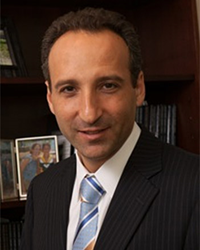
Dr. Ran Y. Rubinstein

According to Dr. Rubinstein, Cynosure Apogee Elite laser hair removal is effective because it contains both the Alexandrite and Long Pulsed YAG lasers in the same system. This allows his staff to switch lasers back and forth based upon the skin type and unique needs of patients.

Cynosure Apogee Elite is ideal for removing hair efficiently in both men and women. Dr. Rubinstein said the most popular hair removal areas his team treats in women are facial hair, under arms, the bikini area, and legs. The most popular areas of treatment for men are the back and the chest.

Dr. Rubinstein explained the differences between Cynosure Apogee Elite and similar procedures offered by other plastic surgeons are quality, value, and the highly specialized care his staff provides patients. He said patients that seek laser hair removal from high volume discount spas, skin care clinics, or plastic surgeons that use substandard laser technologies typically do not achieve the best results possible and can place the patient at higher risk for potential complications such as burns and skin color changes. Dr. Rubinstein further cautions to avoid clinics that rent their lasers as they are often out of date and inferior devices. In addition, laser hair removal procedures are frequently performed by technicians that accompany the lasers and not the clinic's own staff or physicians.
“What one thinks is a bargain often ends up being much more costly because these inferior lasers often require many more treatments to achieve satisfactory results. Some of these laser clinics end up going out of business leaving their clients without any recourse,” said Dr. Rubinstein.

All treatments are supervised by Dr. Rubinstein further ensuring optimal and safe outcomes.

Furthermore, only highly skilled and trained medical staff perform all laser hair removal services at Dr. Rubinstein’s office including Marissa Martinez, a medical esthetician, who has worked with Dr. Rubinstein for four years and has more than 10 years of experience. She trained with some of the top physicians in her field and works diligently to keep up-to-date on the latest skin care technologies. Lisa Thayer, who is a nurse practitioner for Dr. Rubinstein’s practice, joins Martinez in administering laser hair removal services. Lisa Thayer joined the practice in 2012 and was has trained by Dr. Rubinstein who has trained hundreds of cosmetic physicians and nurse practitioners on laser treatments and injectables.

Dr. Rubinstein is double board certified by the American Board of Otolaryngology-Head and Neck Surgery and the American Board of Facial Plastic Surgery. He is a member of the American Society for Laser Medicine & Surgery. Additionally, Dr. Rubinstein is an assistant professor at Columbia-New York Presbyterian Hospital where he is passionate about training young facial plastic surgeons for their future careers.

Based in Newburgh, New York, Dr. Rubinstein is an expert in facial plastic surgery & laser procedures and only offers the best technology for all procedures including Fraxel fractional laser treatments for skin resurfacing, and CoolSculpting to remove stubborn fat. Dr. Rubinstein is sought out for his Rhinoplasty techniques and state-of-the-art certified surgical suite.

More information about Dr. Rubinstein and his practice, please visit: http://www.yourfacemd.com
Ran Y. Rubinstein, M.D..

Laser & Cosmetic Surgery Specialists, PC
845-863-1772
200 Stony Brook Ct #2
Newburgh, NY 12550

Read More

Laser hair removal can be a safe treatment

Is laser hair removal safe?

When performed by a dermatologist, laser hair removal is safe and effective. When done by inexperienced practitioners, laser hair removal can be dangerous. Burns, permanent changes to skin color and scars can result.

Advances in laser medicine in recent years have made it possible for people who were considered poor candidates in the past to have effective treatment today. However, laser hair removal must be performed very carefully. The American Academy of Dermatology recommends that anyone considering laser hair removal consult a board- certified dermatologist.

Who chooses laser hair removal?

People who no longer are willing to shave, pluck or wax body parts, people who have uncomfortable skin reactions from removing unwanted hair and people with excessive hair growth are choosing laser techniques.

What can lasers remove?

Lasers designed for hair removal can be used on most parts of the body and are effective in treating large areas of the body. Common laser hair removal requests include the face, especially the upper lip and chin, back, bikini area, chest, neck, shoulders and legs.

What is the process?

For the procedure, the area to be treated is cleansed and, depending on the location, sometimes a topical anesthetic is needed.

The laser removes hair by vaporizing it, causing heating to the bulb of the hair follicle and destruction of the hair. Patients describe the laser pulses as a feeling of warm pinpricks or a rubber band being gently snapped against the skin. The length of treatment depends on the size of the area: an upper lip takes minutes while the entire back can take more than an hour. You can expect a 40 to 50 percent reduction in hair after the first treatment, and you will see the results immediately.

Successive treatments will increase the hair reduction. Most patients remain hair free for months or even years. When it regrows, patients have noticeably less hair, which is finer and lighter in color. Laser hair removal can be repeated when growth reappears.

How long is recuperation?

Following treatment, you will need to prevent exposure of the treated area from direct sunlight, tanning beds, sun lamps or other tanning equipment. You may have some redness and swelling. Most people return to their everyday activities immediately after treatment.

Does insurance cover it?

Insurance generally does not cover laser hair removal as a cosmetic procedure, but may cover it if there is medical reason for it. Insurance coverage varies widely, so check with your provider.

Jeffrey Smith is a dermatologist at Sanford Dermatology, located at the Sanford North Clinic in Bismarck. Smith received his bachelor’s degree from Brigham Young University in Provo, Utah, and then a master’s degree in public health from the University of Utah at Salt Lake City. He earned a medical degree at Texas Tech University School of Medicine in Lubboc, completed an internship at The Methodist Hospital in Houston, Texas, and a residency in dermatology at New York Presbyterian Hospital/Weill Cornell Medical College in New York, N.Y.
Read More
Powered By Blogger · Designed By Best Laser Hair Removal